
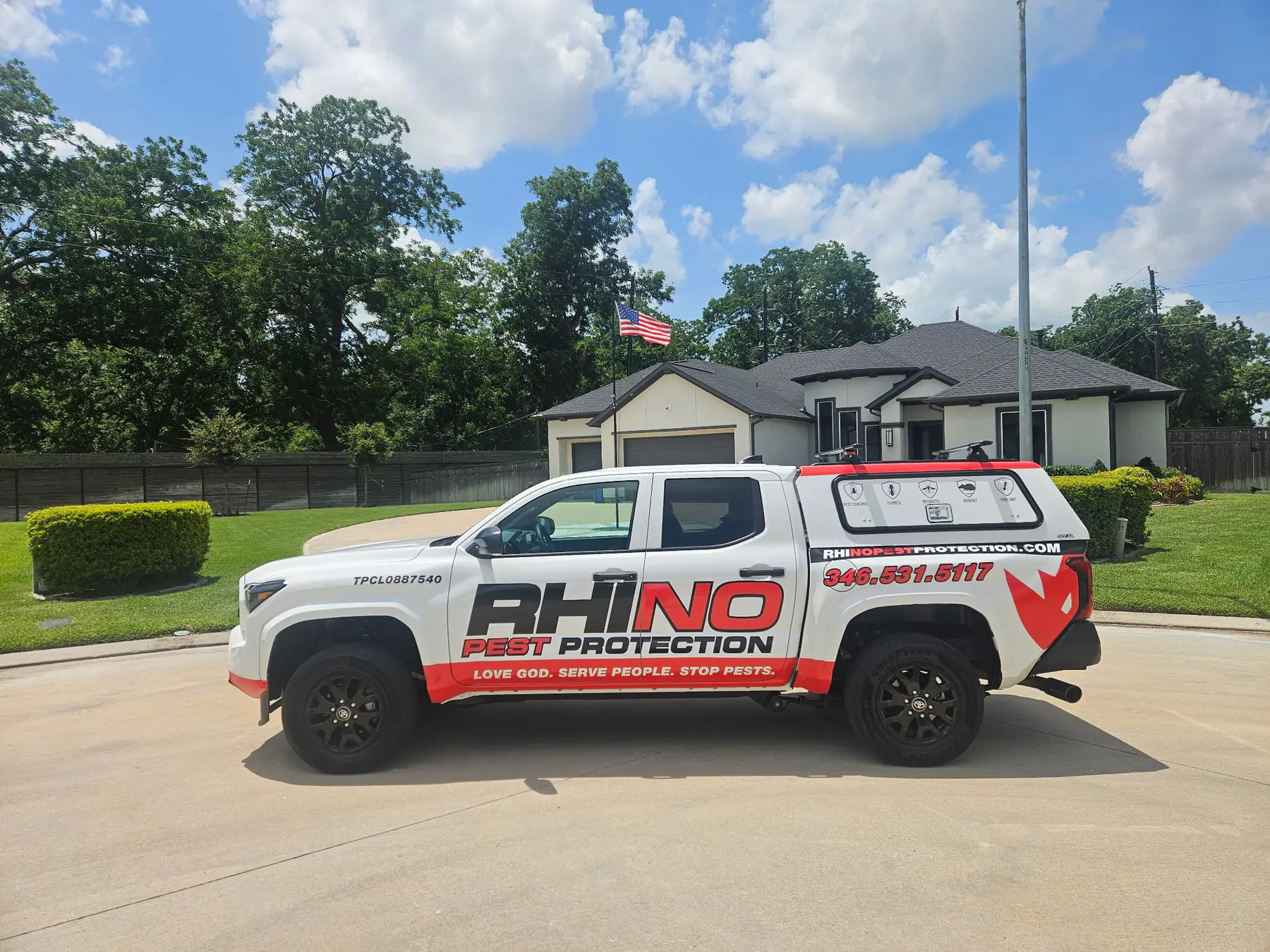
Most rodent control is sold as trapping. Trapping is the part you can see working, and it is the part that stops working the moment the traps come out, because the gap the rats walked through is still open. Rhino handles both halves of the job in-house, the trapping and the sealing, and quotes the work after an inspection.
What rodent control actually has to accomplish
There are two separate problems in a rodent call, and solving one does nothing about the other.
The rodents already inside have to be removed. The way they got in has to be closed. A company that only traps is renting you a quiet attic, and a company that only seals has shut rodents inside the wall.
Rhino runs both tracks at once. Trapping and monitoring on one side, entry-point sealing on the other.
The rodents in Greater Houston homes
- Roof rats. The climbers. They come in high, along the roofline and utility penetrations, and they are the most common attic rodent on the Gulf Coast.
- Norway rats. The burrowers. Lower entry, along the foundation, garages, and slab penetrations.
- House mice. Small enough to exploit gaps nothing else can use, and fast to establish once inside.
- Field mice. Seasonal pressure, heaviest as the weather turns and the yard stops being comfortable.
A roof rat gets through an opening about the size of a quarter. A house mouse gets through one about the size of a dime. That is the standard the sealing work has to meet, and it is why approximate sealing fails.
The exclusion work, specifically
Exclusion is the sealing side of rodent control, and it is the part most pest companies in the area send out to a subcontractor. Rhino does it in-house.
The work covers entry points, weep hole covers, garage door seals, vent screens, soffits, and bathroom vents.
Those six are not a generic list. They are where the gaps actually are on homes here, and a rodent inspection that does not look at all six has not finished looking.
Every exclusion job starts with an inspection and a written estimate, because every house is different. The roofline, the age of the construction, and how many penetrations a past contractor left oversized all change the work.
The trapping and monitoring side
While the sealing gets handled, the removal side runs in parallel.
Tamper-resistant exterior bait stations. Monitored interior snap traps. Follow-up checks on every quarterly visit for as long as the plan runs.
Monitored is the operative word. Traps that nobody reads are decoration, and the trap count over time is the only honest measure of whether the problem is actually closing out.
How Rhino decides the job is done
This is the part worth reading closely, because it is where rodent work usually gets called finished too early.
The job is not done when you stop hearing them. It is not done when the sealing is complete. It is done after one full month with no activity in the traps.
Silence is not evidence. A month of clean traps is evidence. The traps stay in and monitored until that month passes.
The warranty, in writing
After the traps come out, materials carry a six-month written warranty.
One specific exception is worth stating plainly. If you replace your roof within those six months, Rhino comes back and reseals the soft joints at no charge, because roofing crews routinely reopen the exact gaps that were sealed.
Most companies would let that failure sit on the homeowner. Naming it up front is the honest version.
Signs worth calling about
- Droppings along walls, in the garage, or on top of attic insulation.
- Gnaw marks on wood trim, stored boxes, or plastic.
- Chewed wiring, which is the reason rodent problems become expensive rather than annoying.
- Nesting material, shredded paper and insulation pulled into a corner.
- Damaged insulation, flattened runs and tunnels across the attic floor.
- Scratching overhead at dusk and just before dawn.
Prevention closes the gap between visits. Store pet food and birdseed in sealed containers, keep limbs cut back off the roofline, and keep the garage door seal intact.
Pricing and how it is quoted
| Service | Covers | Price |
|---|---|---|
| Rodent control and exclusion | Inspection, trapping and monitoring, and in-house entry-point sealing | Quoted after inspection |
| Quarterly pest control | Ants, roaches, spiders, and wasps, plus follow-up checks on rodent equipment in place | $104 initial, then $104 quarterly |
Rodent work is quoted on its own rather than folded into a plan, because the amount of sealing varies more between houses than any other service Rhino sells. Prices are plus tax and current as of August 2026. Estimates are free.
If pests covered by your plan come back between scheduled visits, Rhino provides return service at no charge and generally responds within 24 hours. That is the Rhino Promise.
Homes, businesses, and managed properties
Restaurants, multifamily housing, HOA boards, and property managers get documented service plans through commercial pest control, where rodent documentation is usually the reason for the call.
Rodent service also runs alongside residential pest control for homeowners already on a quarterly plan.
For a city-level look at rodent service, see rodent control in Fulshear, TX.
Common questions about rodent control
-
Does Rhino do rodent exclusion in-house or subcontract it?
In-house. Rhino handles the whole rodent job, the trapping and the sealing. The exclusion work covers entry points, weep hole covers, garage door seals, vent screens, soffits, and bathroom vents.
-
How much does rodent control cost?
Every exclusion job is quoted after an inspection, because every house is different. The number of entry points, the roofline, and the construction all change the work. Estimates are free and the price comes in writing before anything starts.
-
When is the rodent job considered finished?
After one full month with no activity in the traps. Not when you stop hearing them in the attic, and not when the sealing is done. The traps stay in and monitored until a full month passes clean.
-
What warranty comes with rodent exclusion?
Six months on materials after the traps come out. If you replace your roof within those six months, Rhino comes back and reseals the soft joints, since roofing work commonly reopens the exact gaps that were sealed.
-
Is rodent control included in the quarterly plan?
No. Rodent work is its own service with its own inspection and estimate, quoted separately from quarterly pest control. Quarterly visits do include follow-up checks on rodent equipment already in place.
-
What size gap can a rat or mouse get through?
A roof rat can pass through an opening about the size of a quarter, and a house mouse through one about the size of a dime. That is why sealing has to be thorough rather than approximate, and why trapping alone never holds.
Get an honest answer about your rodents
Tell us where you are hearing them and what time of day. Overhead at dusk points one direction, along the floor at night points another.
- Call 346-531-5117 — Crosby, Gary, or Matt answers.
- Request a free estimate — quoted in writing after an inspection.
Love God. Serve People. Stop Pests. — Gary Kirkowski, Founder